
RoadBuddy provides independent information to help drivers compare auto insurance options with confidence. We may earn a commission when you click on partner links, but this never affects our reviews or recommendations. Our content is researched and published independently.
Advertiser Disclosure
RoadBuddy is a free resource that helps drivers compare auto insurance options.
We may receive compensation from some insurance companies and partners when you click on links or request a quote through our site. This may affect where offers appear, but it does not influence our reviews, guidance, or editorial decisions.
Our content is researched and written independently to give you clear and unbiased information.
By using RoadBuddy, you acknowledge and accept this disclosure. Learn more.
Things get complicated real quick when you need your insurance. The claims process, understanding what your insurance actually covers, and dealing with disputes when something is not going as planned: all of this is what will ultimately determine if the insurance company is worth what you’re paying them.
The good news is that the process is much easier when you know what to expect, and most claims can be processed without issues when you know what information to have ready and how to communicate effectively with your insurance company.

What to Do Immediately After an Accident
The first moments after an accident matter because they shape everything that follows in the claims process.
Safety First
First, take care of the safety and medical concerns. If any of the parties are injured, contact 911. Move the cars away from traffic, but don’t leave the accident scene, as it can lead to legal complications, which are not only about insurance.
Call Police if Needed
Contact the police immediately if there are injured, significant damage, or someone has fled the scene. If everyone is safe and both parties are willing to cooperate, you may make a police report, yet it is optional. Obtain a copy of the report: it will be useful when filing your insurance claim.
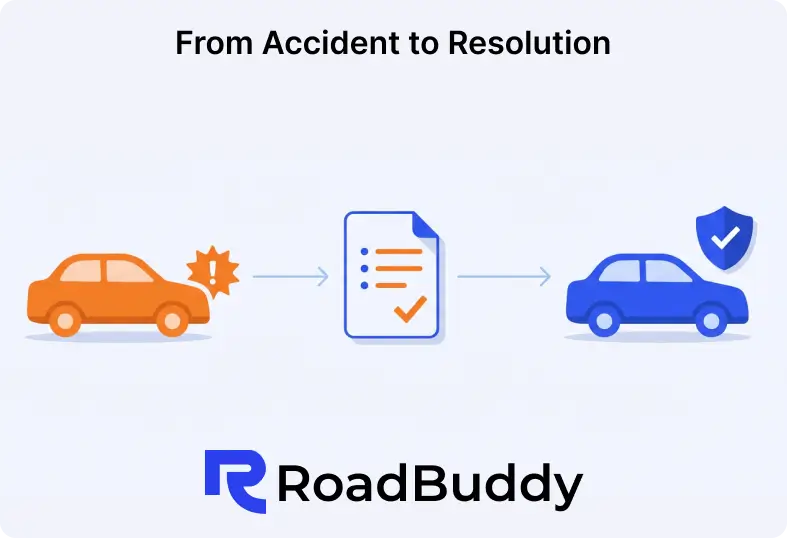
Exchange Information
You should obtain the name of the driver, his or her phone number, the address of the driver, the driver’s license number, the car registration details, and the insurance details of the driver. In addition, you should obtain the insurance company’s name and the policy number.
You should never admit fault for the accident or apologize to the other driver. Instead, you should give a factual account of what happened. All that you say can be used against you at a later date, so it is wise to be objective.
Document Everything
Take photographs of all the damaged vehicles from different angles, the accident scene, road conditions, weather conditions, traffic signs, and positions of the vehicles. These photographs are more important than you think. These photographs will serve as evidence in case of any dispute.
Also, obtain contact information from any witness who may have seen the accident. Sometimes, having a third party’s account of what went on can be helpful in case of any dispute.
Record the details of the accident while the incident is still fresh in your mind. These include the time and place of the accident, the weather at the time of the accident, the speed of your vehicle and the other vehicle, the traffic signals, and what actually happened.
Make Sure You’re Not Overpaying
You’ll be redirected to our partner’s site to get offers.
Advertiser Disclosure
RoadBuddy is a free resource that helps drivers compare auto insurance options.
We may receive compensation from some insurance companies and partners when you click on links or request a quote through our site. This may affect where offers appear, but it does not influence our reviews, guidance, or editorial decisions.
Our content is researched and written independently to give you clear and unbiased information.
By using RoadBuddy, you acknowledge and accept this disclosure. Learn more.

Filing Your Claim: Step-by-Step
Contact Your Insurance Company ASAP
Contact your insurer as soon as possible, ideally within 24 to 48 hours after the accident. This is because most insurance policies have time limits for the filing of claims.
What to Have Ready:
- Your policy number
- Date, time, and location of the accident
- Names and contact information of the people involved
- Other people’s policy numbers, if they were the ones who hit you
- Police report number, if applicable
- A brief account of what happened
- Photos of the damage
Don’t worry if you don’t have everything ready. Your insurer will ask questions and walk you through the process. The goal of the initial call is to simply report the accident and open a claim.
Complete the Claim Form
You will be provided with a formal claim form by your insurance company. Fill it completely and accurately with all the information requested. Provide copies of the following documents:
- Your driver’s license
- Car registration certificate
- Police report (if you have one)
- Photos of the damage
- Medical reports (if someone was injured)
The more organized you are with your documents, the easier the process will be.
Allow the Adjuster to Inspect the Vehicle
Your insurance provider will assign a claims adjuster to your file. The claims adjuster’s responsibility is to determine the extent of the damage to your car and what repairs are covered by your insurance policy.
The claims adjuster may want to inspect your car to determine the extent of the damage. You can choose to have the claims adjuster inspect your car at your home, at the claims assessment center, or at a repair shop.
You should comply with the claims adjuster’s requests and provide any additional information they may require. The clearer and more cooperative you are, the sooner the process will be completed.
Vehicle Repair Process
After your claim is approved by the adjuster, you have options for getting your vehicle repaired:
- You can have your vehicle repaired at the insurer’s network garage. In this case, the insurance company will make direct payments to the garage, and you will only be required to make your deductible payment, if any.
- You can have your vehicle repaired at any repair shop of your choice. In this case, you may be required to make payments to the repair shop and then seek to be reimbursed, or the insurance company may make direct payments to the repair shop of your choice.
- It is recommended that you hold on to all your repair invoices, which will help you in case of any follow-up questions regarding your claim.
Settlement and Payment
After the repairs have been completed, your claim will be considered settled and closed. You will be paid the final amount or the insurance company will have already paid the repair shop directly.
If your vehicle has been deemed a total loss (i.e., the repairs will cost more than 70-80% of the value of the vehicle), you will be paid the market value of the vehicle minus your deductible.
Make Sure You’re Not Overpaying
You’ll be redirected to our partner’s site to get offers.
Advertiser Disclosure
RoadBuddy is a free resource that helps drivers compare auto insurance options.
We may receive compensation from some insurance companies and partners when you click on links or request a quote through our site. This may affect where offers appear, but it does not influence our reviews, guidance, or editorial decisions.
Our content is researched and written independently to give you clear and unbiased information.
By using RoadBuddy, you acknowledge and accept this disclosure. Learn more.
Medical Claims and Injury Coverage
If you or passengers were injured in the accident, your claim extends beyond vehicle damage.
Seek Medical Attention
Get medical attention even if the injuries appear minor. Some injuries may take a while to manifest symptoms. Having immediate medical documentation is a good idea.
Keep a detailed record of all the medical treatment you have received. This includes any doctor visits, hospital bills, medication costs, physical therapy, and any ongoing treatment. All these costs are the reason for your personal injury protection (PIP) or medical payments coverage.
Report Medical Claims
When making an initial report to your insurer about your injuries and any medical expenses, be sure to inform them.
In the event that you have received any treatment from the at-fault driver’s insurer in a third-party claim scenario, they are liable to pay for your medical expenses if they are found liable.
Understanding Coverage Disputes and Denials
Sometimes your claim doesn’t get approved as expected. Understanding why and what to do about it matters.
Common Reasons for Denied or Disputed Claims
Your claim might be disputed or denied if:
- The insurer claims the damage isn’t covered under your policy. For example, if you’re only carrying liability coverage, damage to your own vehicle isn’t covered. The accident might be deemed your fault if the other driver’s insurance is handling the claim, affecting what they’ll pay.
- Your insurer suspects fraud or misrepresentation – they think your claim description doesn’t match the evidence or that you provided false information when applying for the policy.
- There are pre-existing conditions or exclusions in your policy that apply to this specific situation.
- You didn’t comply with policy requirements, like reporting the accident within the required timeframe or not cooperating with the investigation.
Getting the Denial in Writing
In the event that the claim is denied or the amount is not satisfactory, the next course of action is to request a written explanation regarding the denial. Don’t just accept the denial over the phone. Request that they put it in writing. Having something concrete to work with might just cause the insurance company to rethink their decision because they have to put it in writing.
Review Your Policy
Compare the denial letter with what your policy actually says.
There is a possibility that the insurer may have misinterpreted what the policy says, and there may be some nuances to the policy that they may be overlooking that may actually be applicable to your situation.
Compare the policy exclusions with what the insurer is using to deny your claim.
Appeal the Decision
If you believe the denial is wrong, file a formal appeal with your insurance company. Include:
- The written denial you received
- Your policy document highlighting sections that support your claim
- Additional evidence or documentation that contradicts the denial
- A clear explanation of why you believe their decision is incorrect
Keep records of all communications: emails, phone calls, dates, and names of people you spoke with.
External Help for Disputes
Other options available to you if your internal appeal does not work are:
Contact Your State’s Insurance Department
Every state has an insurance commissioner or department that handles consumer complaints against insurance companies. If you feel that the insurance company is acting in bad faith or is not following the insurance regulations, then you can file a complaint against the insurance company with your state’s insurance department. They have the power to make the insurance company explain their actions and follow the regulations.
Hire an Independent Adjuster
An independent adjuster is a public adjuster who works on your behalf to assess your claim and negotiate with the insurance company. They are usually paid a percentage of the amount that they recover for you, so they have a vested interest in recovering the maximum amount that they can for you.
Consult an Insurance Attorney
If the claim is large and you think that you have a good case, then consulting an insurance attorney is a good option. Insurance attorneys can sometimes recover their fees from the insurance company in certain circumstances.
Litigation as Last Resort
If all else fails, you can file a lawsuit against your insurance company for bad faith claim handling. This is a serious step that should only be taken with legal counsel, but it’s an option when an insurer has clearly acted improperly.
Make Sure You’re Not Overpaying
You’ll be redirected to our partner’s site to get offers.
Advertiser Disclosure
RoadBuddy is a free resource that helps drivers compare auto insurance options.
We may receive compensation from some insurance companies and partners when you click on links or request a quote through our site. This may affect where offers appear, but it does not influence our reviews, guidance, or editorial decisions.
Our content is researched and written independently to give you clear and unbiased information.
By using RoadBuddy, you acknowledge and accept this disclosure. Learn more.
Third-Party Claims: When the Other Driver’s Insurance Pays
If you are not at fault and the other party’s insurance has accepted liability, the process is slightly different.
Reporting to the At-Fault Driver’s Insurer
You can file a claim with the other party’s insurance company instead of or in addition to your own. You report the incident and provide the other party’s insurer with the same details you would provide your own. You should include the details of the accident, photos, police reports, and repair estimates.
The other party’s insurer will take responsibility for investigating the accident and approving the repairs or making a settlement if they accept liability.
Your Own Insurance as a Backup
Your own insurance company will be notified if the other driver’s insurer is handling the claim. Your insurer acts as a backup, and if the other insurer denies the claim or doesn’t have adequate coverage, your own coverage protects you.
Coordinating the Insurers
If both insurers are involved, the two companies will coordinate the investigation of the accident and the determination of liability. This ensures that the case is resolved faster; however, you need to be patient as both companies work towards verifying the details and determining fault.
Common Coverage Issues and What to Know
“My claim was denied because of a pre-existing condition.”
Pre-existing conditions are usually addressed in health insurance, but not in auto insurance. In auto insurance, pre-existing damage refers to damage that existed prior to the accident. If your insurance company says pre-existing damage denial, check if the damage they are talking about really existed prior to this accident. Pictures of your car prior to the accident can be used to refute this.
“My deductible is higher than the damage estimate.”
If your deductible is higher than the damage estimate, you won’t usually file a claim; you simply pay for the repairs yourself. It doesn’t make sense to file a claim if the damage is less than your deductible.
“I was told I’m partially at fault.”
In some states, you can get a percentage of damages even if you’re partially at fault. In other states, known as comparative fault states, the amount you can recover is reduced by your percentage of fault.
“The estimate I got is higher than what the insurance company will approve.”
The insurance company might only approve the amount they estimate, not the actual estimate from the repair shop. If you feel the amount they’re offering is not enough, you can ask your repair shop to write an estimate justifying why the costs are high.
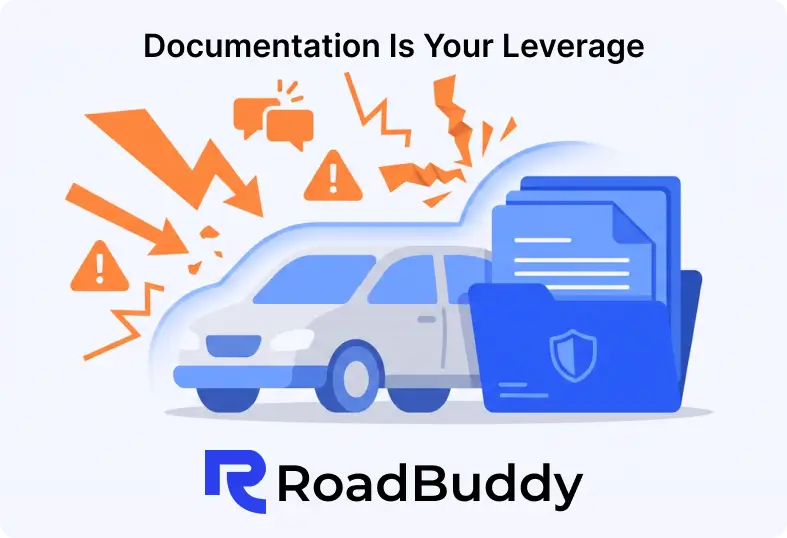
Documentation That Protects You
Documentation is your best protection throughout the claims process.
You should make copies of:
- All accident photos and videos
- Police report and report number
- Insurance policy and policy number
- Claim number assigned to your case
- All communications with your insurer (emails, phone call records, names of people you spoke with)
- Repair estimates and invoices
- Medical bills and treatment records
- Receipts for accident-related expenses (rental car, transportation, temporary repairs)
Make Sure You’re Not Overpaying
You’ll be redirected to our partner’s site to get offers.
Advertiser Disclosure
RoadBuddy is a free resource that helps drivers compare auto insurance options.
We may receive compensation from some insurance companies and partners when you click on links or request a quote through our site. This may affect where offers appear, but it does not influence our reviews, guidance, or editorial decisions.
Our content is researched and written independently to give you clear and unbiased information.
By using RoadBuddy, you acknowledge and accept this disclosure. Learn more.
When to Get Help
You should consider getting professional help (adjuster, attorney, or your state’s insurance department) if:
- Your claim is denied and you believe the denial is incorrect
- The settlement offer is significantly lower than repair estimates
- Your insurer is slow to respond or isn’t returning calls
- You suspect fraud or bad faith handling
- Medical bills or vehicle damage is substantial ($5,000+)
- The other driver disputes fault and the situation is complex
- You’re dealing with an at-fault driver who’s uninsured or underinsured
While most claims go smoothly without any assistance, these are the types of circumstances in which obtaining additional assistance can be beneficial in protecting your rights and ensuring a fair outcome.
The insurance company has the power and experience in handling claims. In cases where claims become complicated or disputed, having someone on your side – an adjuster, attorney, or insurance department – helps equalize the playing field.
Table of contents

Looking for Auto Insuranse?
Make sure you’re not overpaying
You’ll be redirected to our partner’s website to compare personalized offers.
Advertiser Disclosure
RoadBuddy is a free resource that helps drivers compare auto insurance options.
We may receive compensation from some insurance companies and partners when you click on links or request a quote through our site. This may affect where offers appear, but it does not influence our reviews, guidance, or editorial decisions.
Our content is researched and written independently to give you clear and unbiased information.
By using RoadBuddy, you acknowledge and accept this disclosure. Learn more.