
New York Governor Kathy Hochul is making a direct bet that reworking how car insurance claims are litigated will finally slow down the state’s relentlessly high premiums. Her rationale for making these reforms is simple: fraud, staged accidents, and medical billing are driving up costs and distorting the system. Fixing these problems should bring down premiums.
To accomplish these reforms, Hochul has incorporated a broad and technically dense set of reforms into her executive budget. Her proposal is more than a simple set of tweaks. It addresses fault determinations, what constitutes a “serious injury,” and directly targets cases related to staged accidents and medical providers who facilitate fraud. Her message is clear: car insurance in New York is not only high, it is fundamentally unworkable.
Hochul has not coddled her proposal. She has openly admitted that her reforms tackle a difficult problem and will not easily make their way through the Legislature. Her rationale for proposing them is that their difficulty is a measure of their necessity.
Legislature Signals Resistance, But Carefully
That resistance is already taking shape. Assembly Speaker Carl Heastie has already characterized the measure as one of the most contentious aspects of the budget. What he’s really saying is that his concern isn’t with whether or not fraud occurs, but where that line is drawn. Lawmakers are hesitant to enact changes that could, in theory, reduce compensation for drivers who were genuinely injured. New York’s laws have always been about access to court, and attempts to reduce that access spark concerns about fairness and due process. On the other hand, no politician will argue that premiums are not unmanagable. New York is already one of the most costly states in the country for automobile insurance, and that reality is felt by every citizen.
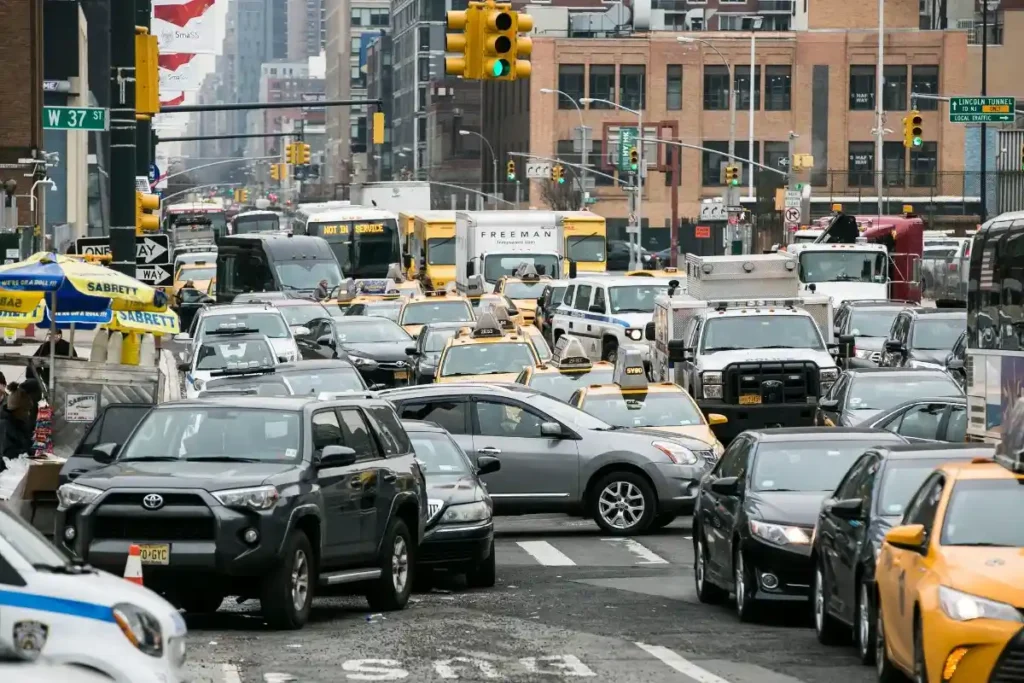
New York drivers are paying an extra “fraud and litigation bill”
“Lobbyists Will Benefit First”
Assembly Insurance Committee Chair David Weprin described the situation succinctly. “The debate that’s about to ensue is going to be good for lobbyists,” he said. “Everyone’s going to start mobilizing.” Insurers, trial lawyers, and advocacy groups will likely begin mobilizing, and the process will likely take a long time and involve many fights.
Weprin agrees with Hochul’s intent of cracking down on fraudulent practices but understands the difficulty of the situation. “If you make too broad of a reform, you overstep.” If you make too narrow of a reform, you may not accomplish anything.
Weprin’s statements are an expression of the general frustration in Albany. Everyone agrees something is wrong with the way car insurance is priced, but no one agrees on the solution.
Trial Lawyers Push Back Hard
Opposition from the legal community has been immediate and aggressive. The New York State Trial Lawyers Association, under the leadership of Andrew Finkelstein, has rejected the plan on a fundamental level.
Their reasoning is based on incentives. By reducing the number of claims, they argue, there is no guarantee that insurance premiums will also decrease. Furthermore, there is a risk that insurers will simply use the savings for other purposes. From this perspective, reducing the number of lawsuits merely takes power and money away from those who have been injured on the road without providing any benefits to policyholders.
Trial lawyers have also criticized the plan on the grounds that it changes the nature of a pricing problem into a litigation problem. Rather than confronting insurers on rate-making and profits, they argue, the plan takes away the rights of those seeking compensation after an accident.
Make Sure You’re Not Overpaying
Advertiser Disclosure
RoadBuddy is a free resource that helps drivers compare auto insurance options.
We may receive compensation from some insurance companies and partners when you click on links or request a quote through our site. This may affect where offers appear, but it does not influence our reviews, guidance, or editorial decisions.
Our content is researched and written independently to give you clear and unbiased information.
By using RoadBuddy, you acknowledge and accept this disclosure. Learn more.

Hochul’s Counter: Fraud Raises Everyone’s Rates
Hochul has strongly pushed back against this characterization. Hochul contends that fraudulent and staged claims are not merely theoretical concepts but actual cost drivers that affect all insured motorists. In her opinion, claims related to criminal activity, unlicensed driving, or staged accidents should never be considered the same as valid claims for injury.
Hochul’s administration asserts that the proposal maintains access to the courts for motorists who are actually injured while removing rewards for those who misuse the system. The governor has repeatedly made the point that fraud is not victimless. Each fraudulent claim directly contributes to higher premiums.
What This Means for New York Drivers
For drivers, the issue gets to the very meaning of affordability. New York car insurance rates have risen dramatically in the last few years, and many families are already making sacrifices in order to afford coverage. It is a rare proposal that actually ties litigation reform to premium savings.
Still, even proponents admit that the effect will be slow. Insurers do not quickly cut rates, even when expenses fall. When the reforms are passed, the savings will have to trickle through loss statistics, rate filings, and regulatory approval.
The bigger picture is whether Albany can walk this tightrope. Can the state reduce abuse without harming valid claims? Can the state compel insurers to turn cost savings into actual premium relief? And can the state do both in a political climate where every change sparks vociferous opposition?
For now, Hochul has decided to roll the dice. Whether this will result in lower car insurance rates or simply another long legislative battle will show how significant this initiative truly is for New York drivers.