
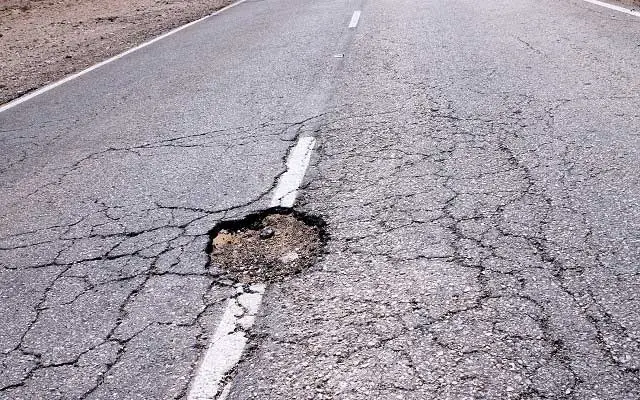
A hit from a pothole can be more than just an annoying thump. It can destroy a tire, twist a wheel, throw your alignment off, and even damage suspension or steering parts. In today’s vehicles, repairs can also include recalibration work if suspension or alignment was altered.
If you want to get reimbursement for pothole damage in the US, there are usually two ways to do so. One is through your own car insurance policy if you have the appropriate coverage, or you can attempt to get reimbursement from the public entity that maintains that road. The latter can be done, but it often takes longer and requires good record-keeping.
Why potholes happen
A pothole occurs when water gets into cracks in the pavement. The pavement then becomes weakened under traffic. In many states across the US, freeze and thaw cycles contribute to potholes. Water seeps into cracks in pavement and then freezes. The water expands and makes the crack bigger. The water then thaws and creates a hole under the pavement. The pavement then gets compressed under a car and breaks off.
Therefore, it makes sense that potholes are usually worse during late winter and early spring in states where freezing temperatures are common.

Does Car Insurance Always Go Up After a Claim?
What damage you should watch for
The most obvious damage is to the tires themselves, especially if there are bubbles in the sidewall of the tire, if the tire is punctured, or if there is a blowout. The wheels can also become bent or cracked, especially if they are low-profile tires. If there is an alignment problem, this can manifest itself in the car pulling to one side of the road or if the steering wheel is not centered.
If you hit a pothole in the road and the car suddenly seems to be acting strangely, you should get it looked at as soon as possible. Driving with damaged tires or wheels can cause further damage to the car.
First step: document the location and the damage
As long as you’re dealing with an insurance company or a city, you’re going to have to provide some type of proof. So take a picture of the pothole and the surrounding area so it will be easily recognizable. You can use a street sign or a business in the area to help identify the location. Also, take a picture of the damage to your car, especially the tire and wheel damage, prior to having it fixed.
This is where a lot of people make a mistake. Once the pothole has been fixed or the tire has been replaced, it becomes difficult to make a case.
Make Sure You’re Not Overpaying
Advertiser Disclosure
RoadBuddy is a free resource that helps drivers compare auto insurance options.
We may receive compensation from some insurance companies and partners when you click on links or request a quote through our site. This may affect where offers appear, but it does not influence our reviews, guidance, or editorial decisions.
Our content is researched and written independently to give you clear and unbiased information.
By using RoadBuddy, you acknowledge and accept this disclosure. Learn more.

Second step: get a written estimate that connects the damage to the impact
Take the car to a repair shop and request an estimate or work order that explains what was damaged and why the shop thinks it is consistent with damage from a pothole. You will want to retain the estimate, final bill, and any towing receipt if you had to tow the car.
The written link between “pothole impact” and “repair needed” is what transforms your experience into a claim file.
Option 1: file through your own auto insurance
In the US, pothole damage claims are normally processed through collision coverage, since it entails damage from contact with a road hazard. Comprehensive coverage is normally relevant in non-collision scenarios such as theft, vandalism, hail, falling objects, or animal collisions.
If you have collision coverage, you can make a claim. Before making a claim, you can consider your deductible and compare it to the cost of repairs. If the repairs are only slightly above your deductible, sometimes it is cleaner to pay the damages yourself, especially if you don’t want the claim to appear on your record. If the damage is extensive, collision coverage can get your car repaired quicker and with less paperwork.

Option 2: try to recover costs from the agency that maintains the road
You can also file a claim with the public agency that is responsible for that particular road. This depends on where the pothole is. City roads are usually maintained by the city, county roads by the county road department, and highways by the state transportation department. Interstates are usually maintained through the state DOT systems, sometimes with the help of contractors.
Most of these agencies require that you fill out a claim form and provide documentation: proof of location, proof of damage, and proof of what you paid or were quoted to pay for the repairs. Most of these agencies also place emphasis on notice. If they can prove that they did not have any notice of the problem, they can deny your claim. If the pothole was reported and left unattended, your claim will be stronger.
This process takes time. Even if you are going to be reimbursed, it will take weeks or months, not days, so this is best done if you can afford to pay for the repairs and wait for an outcome.
What to do if the agency rejects your claim
If you think the denial is incorrect, you can usually ask about an appeal process. In some states, small claims court is an option for higher repair costs, but this is only practical if the cost of the damage was worth the time and trouble of filing.
The best claims will have good photo evidence, a known location, and a repair bill that clearly links the damage to the impact of hitting the pothole.
How to reduce pothole damage going forward
While you can’t avoid all potholes, you can reduce the chances of costly damage by maintaining proper tire pressure and slowing down when you can’t avoid rough roadways. Following a severe impact, do not take new vibrations, pulls, or steering shakes lightly and have your vehicle inspected before the tire wear deteriorates.