
Usage-based insurance (UBI) is rapidly becoming an accepted feature of auto insurance policies, particularly in the United States. Insurers need improved risk pricing as claims costs are rising. Drivers want premiums based on actual driving behavior, not averages. Telematics solutions help both achieve their goals: insurers get improved pricing, and drivers get premiums based on actual behavior.
This explains why the usage-based auto insurance industry is growing: More insurers are offering telematics-based products, more policyholders are participating, and more pricing decisions are based on actual driving behavior.
What is usage-based insurance (UBI)?
Usage-based insurance is a type of auto insurance that uses telematics to measure driving behavior and usage. Instead of relying only on traditional pricing inputs like driving record, location, and vehicle type, a UBI policy also considers how you drive and how much you drive.
Most UBI programs track:
- Miles driven (pay-as-you-drive)
- Speeding and speed variability
- Hard braking and rapid acceleration
- Time-of-day driving (night driving often scores worse)
- Phone distraction (depending on the program)
Some insurers market UBI as a “discount program.” Others use it more directly to set renewal pricing. The difference matters, and drivers should know which type they’re enrolling in.
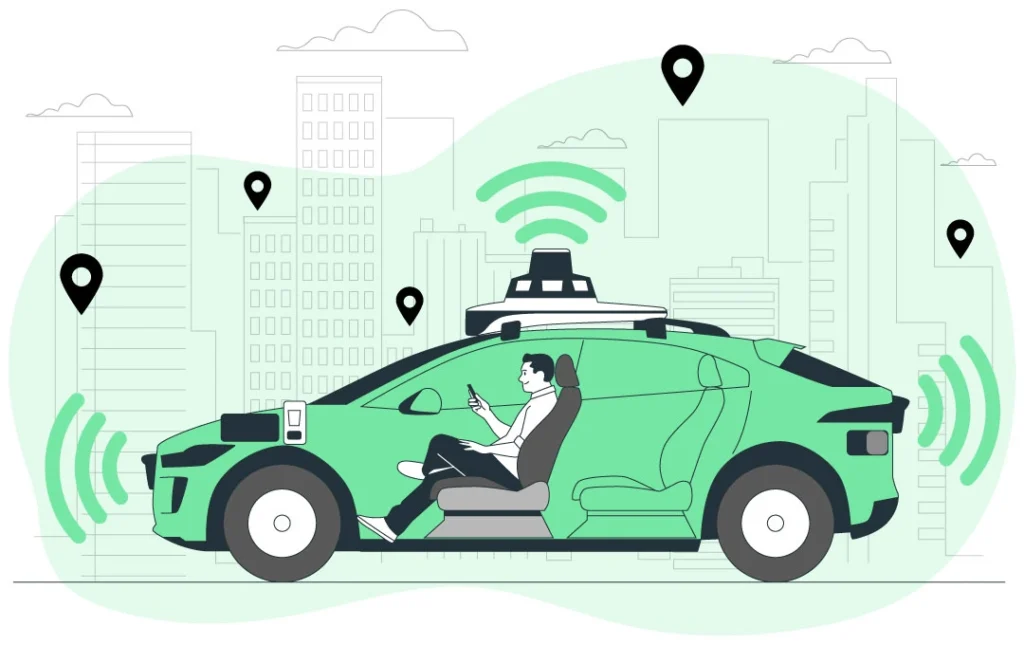
Personal Auto Insurance Could Shrink Sharply as Self-driving Scales
Why the UBI market is growing
Higher claim costs make pricing accuracy more important
There has been an increase in auto insurance losses because of the complexity of repairs, the cost of parts, the time taken for repairs, and the cost of injuries. UBI provides insurers with the ability to accurately price risk and correct mispricing. This enhances underwriting outcomes, particularly when insurers attempt to control loss ratios.
Drivers want more control over car insurance rates
Many people experience an increase in their car insurance premium without an identifiable reason. The concept of usage-based auto insurance is more understandable because people can drive safely and reduce the distance they drive in return for lower premiums. This concept can be attractive to people who drive fewer miles or work from home, or to families with two cars that spend most of the time unused in the garage.
Smartphone telematics reduces friction
The shift from plug-in devices to smartphone telematics has removed a major enrollment barrier. Apps can capture GPS and sensor data without shipping hardware, scheduling installation, or dealing with returns. This makes UBI easier to scale and cheaper to operate.
Connected vehicles support embedded insurance
Increasingly, more vehicles are equipped with in-built connectivity and sensor suites. This will provide an ecosystem in which vehicle manufacturers and insurers will be able to offer embedded insurance products or partnership-based UBI programs. In the future, this will lead to greater adoption, particularly amongst new vehicle buyers.
Make Sure You’re Not Overpaying
Advertiser Disclosure
RoadBuddy is a free resource that helps drivers compare auto insurance options.
We may receive compensation from some insurance companies and partners when you click on links or request a quote through our site. This may affect where offers appear, but it does not influence our reviews, guidance, or editorial decisions.
Our content is researched and written independently to give you clear and unbiased information.
By using RoadBuddy, you acknowledge and accept this disclosure. Learn more.

How UBI risk assessment models work
Modern telematics risk models go beyond mileage. Insurers typically combine multiple signal types to produce a risk score that drives discounts or pricing tiers.
Common model inputs include:
- Exposure metrics
- Miles driven, trip frequency, and driving environment signals (urban vs rural patterns, highway vs local, commuting intensity).
- Driving behavior metrics
- Harsh braking, rapid acceleration, speeding, sharp turns, and consistency of risky events over time. Insurers look for patterns, not just single incidents.
- Time-of-day and context metrics
Night driving often correlates with higher loss severity. Some models also account for driving in heavy traffic conditions, though the transparency of these inputs varies.
Distraction signals
Many programs look at phone use while the vehicle is moving. Some differentiate between hands-free activity and handheld interaction, while others treat any screen interaction as risk.
Many insurers now rely on machine learning to interpret behavior patterns. The goal is to distinguish defensive driving events (hard braking to avoid a crash) from risky habits (tailgating and late braking). Model quality differs by carrier, which is why drivers can get very different results across programs.
Key UBI trends shaping auto insurance
Smartphone-based telematics dominates enrollment
Smartphone-based UBI is becoming popular because it is simpler to implement and simpler to manage. This also enables insurance companies to refine scoring models rapidly through software upgrades.
Automaker-insurer partnerships are rising
Automakers are increasingly becoming involved as data owners
This increases the likelihood of a customized pricing model and a better user experience, but it also brings up concerns regarding data sharing, consent, and control.
UBI is expanding to include on-demand coverage
Telematics-based pricing is becoming popular in the form of car-sharing products, short-term coverage, and other “coverage activates when you drive” products. This is a natural extension of usage-based pricing models.
Regulators and consumer trust will influence UBI adoption
UBI adoption will depend on transparency. Drivers are more likely to sign up for UBI if they are aware of what is collected, scoring models, and premium increases. Privacy concerns and data retention are becoming increasingly important with rising UBI adoption.
What to include in a UBI market analysis for the US
If you’re writing about usage-based insurance in the United States, the most useful angles tend to be practical:
- Discount-only vs price-impacting programs (can your premium go up?)
- What behaviors are weighted most heavily (speeding, phone distraction, night driving)
- How long the program collects data and what happens after the scoring period
- Data retention and sharing policies
- Who UBI benefits most (low-mileage drivers, safe drivers) and who may be disadvantaged (urban commuters, night shift workers)
What this means for insurers and drivers
UBI is beneficial to insurance firms because it helps in segmentation, also potentially leading to fewer losses if the pricing is highly correlated to behavior. To drivers, usage-based car insurance can mean cheaper premiums if driving is safe and limited.
The biggest long-term problem is that of trust. The more that users understand how scoring works in a UBI program and are not surprised at renewal time, the more likely they are to stick with the service. The more that users do not understand scoring or are surprised by the results, the more they are likely to defect.