
Morningstar is modeling a future where personal auto insurance becomes a much smaller business once high-level self-driving discounts move from pilot programs into the mainstream vehicle fleet. In the firm’s most aggressive adoption scenario, the shift happens fast enough that personal auto insurance could look “largely obsolete” within about 20 years. In a more moderate scenario, the line persists longer and doesn’t face a full structural reset until closer to 2060.
The key driver in Morningstar’s framework is liability. As vehicles reach higher levels of autonomy, responsibility for crashes can move away from the human driver and toward the company that designed, built, or enabled the autonomous system. If that happens at scale, the traditional personal auto model is pressured from both ends: fewer crashes and a different party on the hook when crashes occur.
Why autonomy changes insurance economics
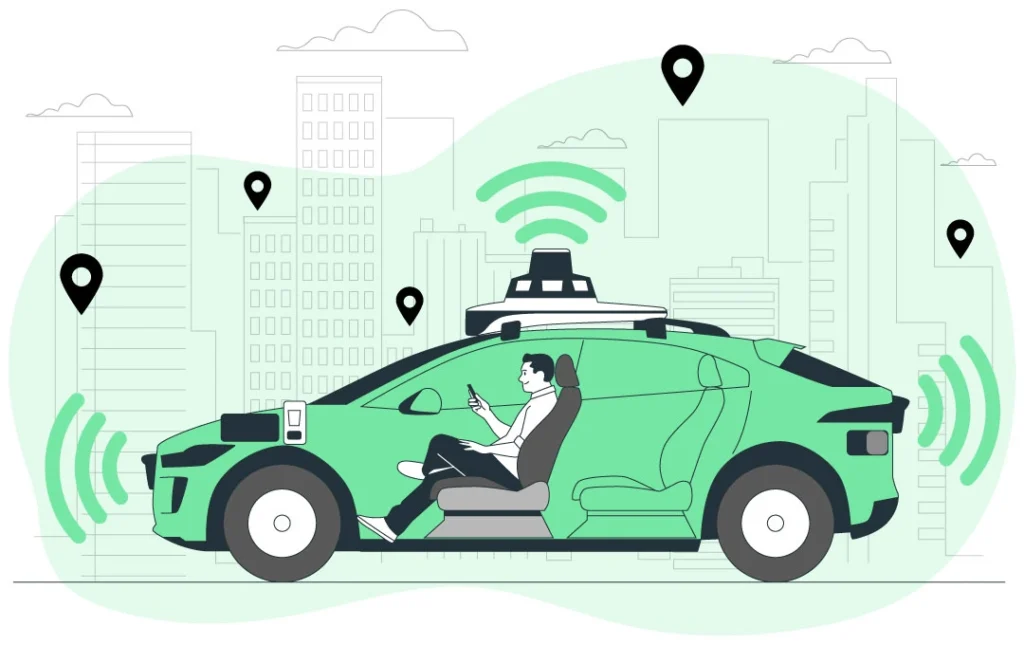
Personal auto insurance is built around individual driver behavior, exposure, and fault. Higher-level autonomy changes that foundation because the “driver” becomes software for a growing share of miles traveled. Morningstar’s report argues that once Level 4 or Level 5 autonomy becomes common, the insurance burden can migrate from driver liability toward product liability carried by manufacturers or the entities that provide the autonomous stack.
That does not mean insurance disappears. It means the premium pool may move into different coverage lines, different policyholders, and different distribution channels. The industry still has to price risk and pay claims, but the center of gravity shifts away from household policies.
Usage-Based Insurance Market: What’s Driving Growth and How UBI Pricing Models Work
The timeline Morningstar uses
Morningstar’s projections depend on three moving parts: how quickly the technology matures, how fast consumers and fleets adopt it, and how quickly older vehicles leave the road.
To anchor the “technology maturity” phase, the report defines an early milestone: the point when 0.25% of new vehicles sold have Level 4 capability or higher. Morningstar then models three development paths. In the fastest path, that milestone appears as early as 2026. In a more aggressive but less extreme path, it shows up around 2027. In the moderate path, the milestone arrives closer to 2029.
From there, the report estimates how quickly Level 4/5 capability could scale to high adoption, using diffusion patterns from prior technologies as a reference. The model suggests an 80% adoption rate could theoretically arrive in as little as seven years in the fastest scenario, with longer timelines under aggressive and moderate assumptions.
Scrappage matters because the US fleet turns over slowly. Even if new vehicles shift rapidly toward autonomy, the installed base keeps older technology on the road for years. Morningstar assumes higher scrappage in its faster scenarios, meaning older cars exit the fleet faster over time.
With those assumptions combined, Morningstar projects that 60% of cars on the road could reach Level 4 autonomy or higher by 2044 under the most aggressive scenario, by 2053 under an aggressive scenario, and by 2060 under the moderate scenario.
Make Sure You’re Not Overpaying
Advertiser Disclosure
RoadBuddy is a free resource that helps drivers compare auto insurance options.
We may receive compensation from some insurance companies and partners when you click on links or request a quote through our site. This may affect where offers appear, but it does not influence our reviews, guidance, or editorial decisions.
Our content is researched and written independently to give you clear and unbiased information.
By using RoadBuddy, you acknowledge and accept this disclosure. Learn more.

When personal auto insurance starts to feel the impact
Morningstar’s view is that the personal auto line doesn’t change dramatically until Level 4 autonomy is present at meaningful scale, because Levels 2 and 3 still depend on a human to supervise or take over in many conditions. As long as the driver is expected to intervene, driver liability remains central, and personal auto insurance remains necessary.
The report treats 10% penetration of Level 4+ vehicles as the point where the impact becomes material. In the most aggressive scenario, Morningstar places that around 2035. From there, the decline accelerates as penetration grows, with the business deteriorating more rapidly between 10% and 60% penetration. Morningstar’s framework suggests that once penetration reaches the higher band, the personal auto line can stop creating value in the same way and capital tied to the line would increasingly be returned to shareholders.
Company exposure: why some insurers look more insulated than others
Morningstar applies this scenario work to several large insurers to illustrate the range of outcomes. The key variable is concentration: how dependent the company is on personal cheap auto premiums relative to other lines.
Travelers: limited exposure due to business mix
Morningstar expects Travelers to experience a relatively small effect from a long-run decline in personal auto because the company has a large commercial insurance business and a broader premium mix. In this framing, personal auto is not the dominant engine of enterprise value, and the company’s risk is more muted even if the line shrinks over time.
Allstate: more auto exposure, but other lines provide options
Allstate has heavier reliance on auto than Travelers, but Morningstar notes it also has a significant homeowners presence. In the modeled outcome, Allstate has pathways to remain viable even if it scales back personal auto, because it is not exclusively dependent on that line to function as an insurer.
Progressive: concentrated exposure makes the downside larger
Morningstar’s most severe outcome is reserved for Progressive, largely because the company is heavily concentrated in personal auto. The report argues that a business with strong returns and a narrow competitive advantage in personal auto can paradoxically face more value destruction if the line becomes structurally smaller. In the worst-case modeling, Morningstar also considers scenarios where commercial auto could face similar long-run pressure as autonomy expands into fleets.
These modeled outcomes are not presented as predictions of what will happen to any specific company in a straight line. They are stress tests built around one disruptive change: high adoption of Level 4/5 autonomy and a broad shift in who bears liability.
The role of “economic moat” in Morningstar’s analysis
Morningstar uses its “economic moat” framework to describe whether a company can earn excess returns for a long period of time. In this report, the moat discussion is used to explain how durable profitability interacts with disruption risk.
The report’s logic is that companies with business models built on long-lasting advantages can generate strong value in stable environments. When a core line faces structural decline, that same concentration of value can become a vulnerability, because more future profit is tied to the line being intact.
Morningstar’s moat framework points to five common sources of durable advantage: intangible assets, switching costs, network effects, cost advantage, and efficient scale. The report treats moat ratings as an analytical lens rather than a guarantee of investment outcomes.
What to take away from the report
Morningstar’s modeling is a reminder that autonomy is not only a vehicle technology story. It is a liability and insurance structure story. The fastest scenario compresses the timeline and forces a sharper transition. The moderate scenario gives the industry more time, but still changes the long-run direction.
The biggest uncertainty is not whether driver assistance continues to improve. The uncertainty is how quickly Level 4 autonomy becomes common in personally owned vehicles, how regulators and courts treat liability when software is driving, and how quickly the fleet turns over. Those factors decide whether personal auto insurance stays central for decades or gradually shifts into a smaller role while product liability and commercial coverages take more weight.