
Most people file drunk driving under “criminal” and “safety” and stop there. Fair. But if you’re a driver who just wants your bills to stay sane, drunk driving is also an insurance problem. It affects what happens after a crash, how long claims drag out, and why premiums creep up even when you’ve been a boring, clean-record adult for years.
The death toll is steady and ugly, but the bigger insurance takeaway is this: alcohol-related crashes aren’t random. They cluster at night, on weekends, and around travel-heavy months. Insurers love predictable patterns because predictable patterns can be priced. And when the losses are severe (which they often are with alcohol), the pricing gets harsh fast.
Why insurers treat DUI like a financial grenade
A DUI is a line on your record that screams high severity risk. Insurers don’t just worry about the likelihood of a crash. They worry about the size of the payout when it happens. Alcohol-related crashes are more likely to involve injuries, multi-car pileups, lawsuits, and long, expensive claim investigations. That’s why DUI laws and surcharges are so aggressive compared to most violations. And it’s not only the surcharge. A conviction can blow up your pricing in multiple ways at once.
Your “good driver” discounts disappear. Any accident forgiveness add-on you had can get removed or become irrelevant. You may get moved into a worse tier. Some carriers will non-renew you entirely. If you get dropped, you’re shopping in the high-risk/nonstandard market, where rates are typically worse and options can feel more limited.
In many states, a DUI also triggers an SR-22 requirement. That’s not an insurance policy by itself, it’s a state filing that proves you have coverage. But being in SR-22 land is basically a scarlet letter for pricing. It tells insurers you’re under scrutiny, and you pay for that.
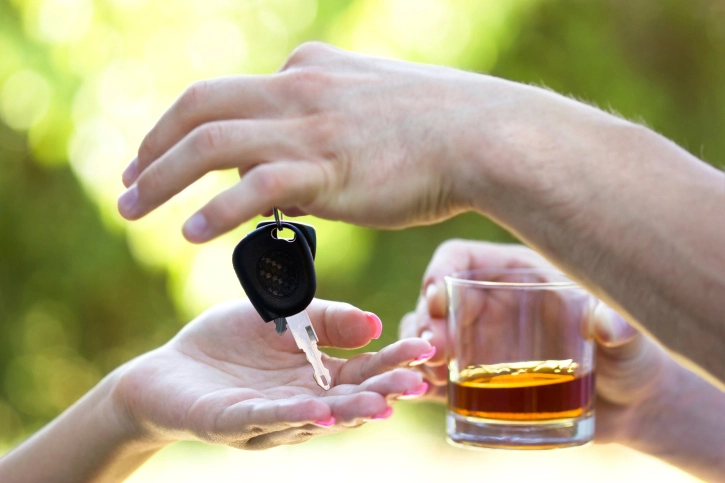
Holiday Drinking and Driving: Real Costs, Real Risk, Easy Prevention
Why drunk-driving claims are nastier than “normal” claims
There’s more liability investigation. There’s often a criminal case running in the background, which slows certain parts down. There are more medical bills, more attorney involvement, and more disputes about limits and who pays what first. Even if you’re the sober driver who got hit, you can still get stuck in claim purgatory if the at-fault driver is underinsured, uninsured, or broke.
That’s the moment UM/UIM stops being an “extra” and becomes the only reason you’re not paying out of pocket. Uninsured/underinsured motorist coverage is the protection that kicks in when the other driver doesn’t have enough (or any) liability coverage to cover your injuries. And yes, a lot of people driving drunk also have trash insurance or no insurance. Shocker.
MedPay or PIP matters for the same reason. Drunk-driving crashes skew toward higher injury severity, and medical billing doesn’t wait for liability to settle. MedPay (or PIP in no-fault states) helps cover immediate medical costs so you’re not floating ER bills while insurers argue.
Rental reimbursement is another sleeper. Repairs take longer now: parts delays, calibration, shop backlogs. A claim that drags for weeks is annoying if you have a second car. It’s a problem if you don’t. Rental coverage is cheap relative to the pain it prevents.
Make Sure You’re Not Overpaying
Advertiser Disclosure
RoadBuddy is a free resource that helps drivers compare auto insurance options.
We may receive compensation from some insurance companies and partners when you click on links or request a quote through our site. This may affect where offers appear, but it does not influence our reviews, guidance, or editorial decisions.
Our content is researched and written independently to give you clear and unbiased information.
By using RoadBuddy, you acknowledge and accept this disclosure. Learn more.

The stats that actually matter for your insurance decisions
You don’t need a spreadsheet of numbers to get what insurers do with this. A few patterns drive most of the pricing behavior.
First, alcohol impairment shows up disproportionately at night and on weekends in fatal crash data. That’s why enforcement spikes then, and it’s also why some insurers love telematics scoring. If you’re on a usage-based program and you drive late a lot (night shifts, weekend work, caregiving), you can get scored as “riskier” even if you’re sober and careful. The model doesn’t know your life story. It just knows the loss history.
Second, the worst alcohol-related outcomes often involve very high BAC levels. That means the claims aren’t just frequent, they’re severe. Severe claims are what drive premiums up for everyone, because insurers spread those losses across the entire pool.
Third, geography matters. Some states have higher alcohol-related fatality shares, and large states have massive totals simply because of volume. Insurers bake local loss experience into rates, which is why your zip code can matter almost as much as your record. It’s not “fair,” but it’s how the pricing works.
What to carry if you don’t want to get financially wrecked by someone else’s DUI
Carry real UM/UIM limits, not state minimums if you can avoid it. Minimums exist to satisfy the law, not to protect you from modern medical costs and income loss. If you can raise UM/UIM to match your liability limits, that’s usually a clean rule of thumb.
Don’t cheap out on MedPay/PIP. Even a few thousand can make the early phase of a claim much less stressful, especially if you end up needing follow-ups, imaging, or physical therapy.
Keep rental coverage if you rely on your car. If you’re retired and don’t drive much, you might think it’s unnecessary. But the time you need a rental is exactly when you’re least able to deal with extra logistics.
And if you’re driving an older paid-off car, don’t automatically drop collision and comp without thinking. A drunk driver hitting you doesn’t guarantee their insurer pays quickly or fully, and if their coverage is weak, you may end up needing your own policy to get moving again.
What happens after a DUI
If you’re the one with the DUI, don’t expect to “talk your way out of it” with an adjuster or hope it won’t show up. It will. It’s on your motor vehicle record, and carriers pull it during underwriting and at renewal. The practical steps are not glamorous. You shop immediately, prepare for a big increase, ask about SR-22 if your state requires it, and avoid lapses in coverage because a lapse plus a DUI is how you get trapped in the worst pricing tier.
Also, don’t assume the cheapest nonstandard policy is safe. Some of those policies are bare-minimum liability with weak add-ons, and you’ll only find out when you need towing, a rental, or actual claim support.
Conclusion
Drunk driving makes auto insurance more expensive for everyone because the claims are severe and frequent enough that the cost gets spread across the whole market. That’s part of why you see rates rising even when your record is clean and you haven’t filed a claim. You’re paying for the risk environment, and drunk driving is one of the most expensive risks on the road.