
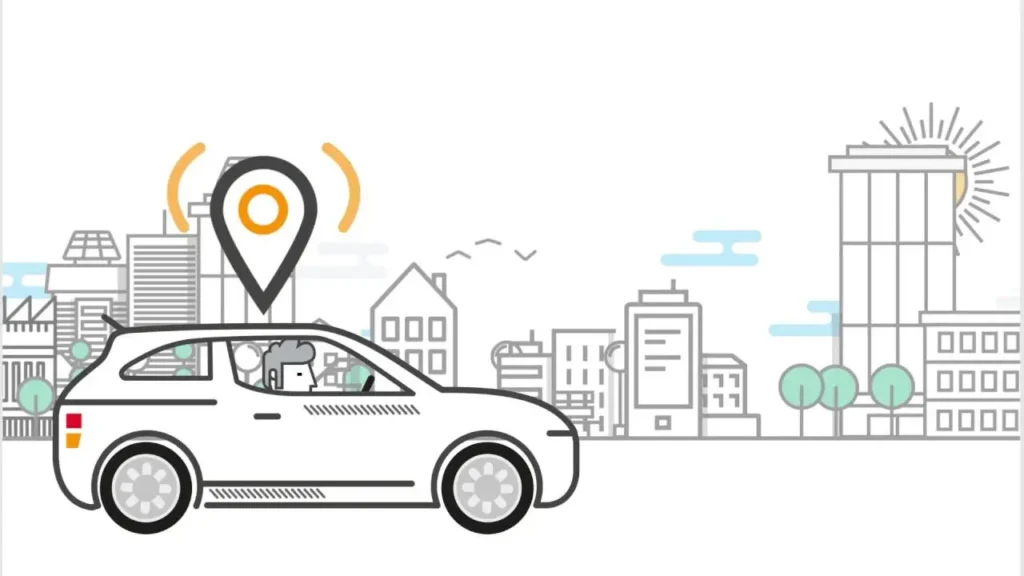
Usage-based insurance has gone from being a niche product to something that many American drivers have experienced. The simple premise is this: your insurance company (or a third-party app) uses your phone to track your driving habits, such as speeding, hard braking, and aggressive acceleration. In exchange, you may receive a discount or other rewards. The question has always been whether these programs actually increase safety or simply measure it.
A recent study by Jeffrey Ebert directly addressed this question by using a smartphone-based driving app and testing the effects of different types of feedback and rewards. The study shows a clear conclusion: when high-risk drivers are provided feedback and a reward, speeding and other dangerous behaviors decrease significantly. However, one of the most hazardous behaviors, using a handheld phone, showed little change.
What the study tested
The study used ads on Facebook and Instagram to recruit 1,449 drivers from across the United States. Each of the participants used a smartphone app that tracked their driving behavior. The participants were then randomly assigned to different groups for a period of 12 weeks.
Some of the participants received text messages every week on four behaviors simultaneously: speeding, phone use, hard braking, and rapid acceleration. Other groups were encouraged to concentrate on one behavior at a time, either algorithmically chosen or by the driver. The control group had their driving tracked but did not get any feedback. The participants could earn a maximum of $100 for safe driving during the period of the study, which allowed the evaluation of coaching and incentives as opposed to tracking alone.

How young drivers can pay less for car insurance
What changed and what did not
Drivers who received feedback, as well as incentives, showed a 11% to 13% reduction in speeding compared to the control group. Hard braking was reduced by 16% to 21%, and aggressive acceleration was reduced by 16% to 25%. These are not trivial results, particularly given that they addressed behaviors that insurance companies and traffic safety organizations believe are related to crash risk and severity.
One thing that is important to note is what happened after the conclusion of the program. When the incentives and feedback were removed, the reductions were not reversed right away. The researchers were able to follow the participants after the conclusion of the program and found that the positive behaviors were maintained for weeks, which indicates that at least some of the participants were able to change their habits rather than just acting in anticipation of the reward.
There was one area in which the program failed. The participants were using their phones for a significant portion of their driving time at the beginning of the program and were at the same level throughout the program. Therefore, handheld smartphone use and distracted driving (which claims 4000 US drivers per year) was not reduced.
Make Sure You’re Not Overpaying
Advertiser Disclosure
RoadBuddy is a free resource that helps drivers compare auto insurance options.
We may receive compensation from some insurance companies and partners when you click on links or request a quote through our site. This may affect where offers appear, but it does not influence our reviews, guidance, or editorial decisions.
Our content is researched and written independently to give you clear and unbiased information.
By using RoadBuddy, you acknowledge and accept this disclosure. Learn more.
Why phone use did not improve
The researchers offered a practical explanation: the scoring system may have been too forgiving. If drivers are told they are performing well on phone use even when they are still using their phone regularly, they will focus their effort elsewhere. In this study, many participants received high “grades” for phone behavior despite continued phone handling, which likely reduced motivation to change that part of their driving.
This is a broader design issue for usage-based insurance. A program needs to be strict enough to flag genuinely risky behavior. It also needs to stay usable, because if the app feels overly punitive, drivers may quit the program. Insurers want participation. They also want risk reduction. Balancing those goals influences how scoring thresholds are set, and phone distraction appears to be an area where programs may be too lenient to drive change.
Did narrowing the focus help?
One theory going into the study was that drivers might improve more if they were told to focus on one behavior at a time, instead of receiving multiple warnings and metrics at once. The results did not strongly support that theory. Feedback on all four behaviors performed about as well as single-behavior coaching, and many participants reported working on multiple habits regardless of which group they were assigned to.
This matters for how insurers design their apps. It suggests that simpler “one goal at a time” coaching is not automatically more effective. What seems to matter more is that drivers receive consistent feedback and have a reason to care about it, such as an immediate reward or a clear financial benefit.

What this could mean at scale
The researchers modeled what could happen if incentive programs were adopted more broadly. Because the US has millions of crashes and a large number of injuries each year, even modest percentage reductions in risky behavior can translate into large public safety effects. Those projections depend on the assumption that changes seen in a study environment would generalize nationally, which is not guaranteed, but it helps explain why insurers and policymakers pay attention to this category.
The study also tested whether the intervention worked similarly across different groups. Results were generally consistent across age, sex, and racial groups, which is important because usage-based insurance has raised concerns about uneven impacts. One area that did show differences was geography: rural drivers appeared to respond less to the feedback than urban or suburban drivers, possibly because rural driving offers fewer frequent “training moments” like dense traffic, close following distances, and frequent stops.
What drivers should know before enrolling in similar monitoring program
If you are thinking about a usage-based program, it may be helpful to think about it as a trade-off that can be measured, rather than a blanket discount. The best way to approach it is to ask a few questions before you enroll.
First, you should determine if the program has the potential to increase your rate or if it is strictly a discount program. Some programs are strictly upside, while others have the potential to adjust your rate based on performance at renewal. Second, you should determine what the measured behaviors are and how they are weighted, particularly phone use and driving during peak hours. Third, you should determine how long the data is retained and if it is shared with partners.
Lastly, it is important to remember that the greatest discounts are often achieved through long-term behavior, and it is up to you to achieve that. If you enroll in a program and go back to your old ways, your score will eventually catch up with you, and the benefits of the program will be diminished.