
Car insurance has historically used broad categories to determine insurance prices, including the driver’s age, location, driving record, and type of car. Usage-based insurance, however, takes a different approach. New research has revealed that this change is not just a refinement of the previous model; it is, in fact, making the roads safer.
New research, carried out by Penn Medicine’s Perelman School of Medicine, has revealed that drivers who are part of behavior-based insurance programs have been reducing dangerous driving behaviors. The study, published in Accident Analysis & Prevention, has demonstrated that when insurance incentives are linked to real-world driving, drivers change.
What the Study Found
Drivers who took part in the test program cut their rates of speeding by as much as 13 percent. Hard braking and acceleration were also reduced by as much as 25 percent. These are not trivial reductions. From an insurance viewpoint, these are all important factors that are related to crash rates and severity of claims.
But perhaps most important, these new habits did not fade away after the incentives stopped. Even after the 12-week program, drivers continued their improved habits over a subsequent six-week period. That suggests that not only did the program change behavior, but it also helped create new habits.
As a matter of fact, as the lead author of the study points out, insurance companies have every reason to encourage such behavior. By cutting down on risky maneuvers, they avoid crashes, reduce medical costs, and minimize vehicle damage. In a country where over six million vehicle crashes and two million injuries take place each year, these are major loss preventions.
Why Insurers Care About Behavior Change
From an underwriting standpoint, traditional pricing models are driven by proxies for risk. Accidents, tickets, age, and credit are used as predictors for future losses. UBI provides an additional predictor: actual driving behavior.
As insurers observe decreases in speeding and aggressive driving behaviors, they are more likely to lower premiums for high-risk drivers with confidence. Fewer and less severe claims mean better loss costs. That’s why insurers are increasingly willing to sacrifice privacy for accuracy.
The trade-off for consumers is clear: share your driving habits and save money by driving safer.
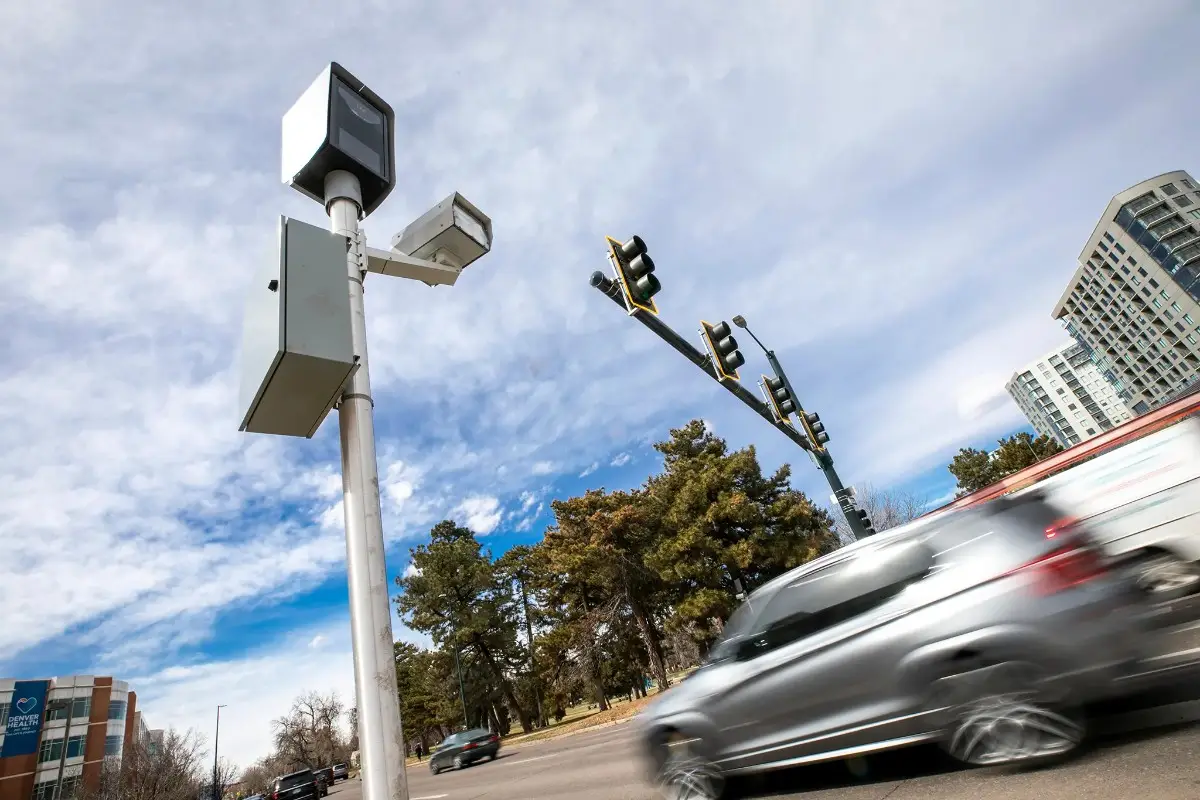
Can Hail Alerts and Speed Cameras Lower Colorado Car Insurance?
How Usage-Based Insurance Programs Work
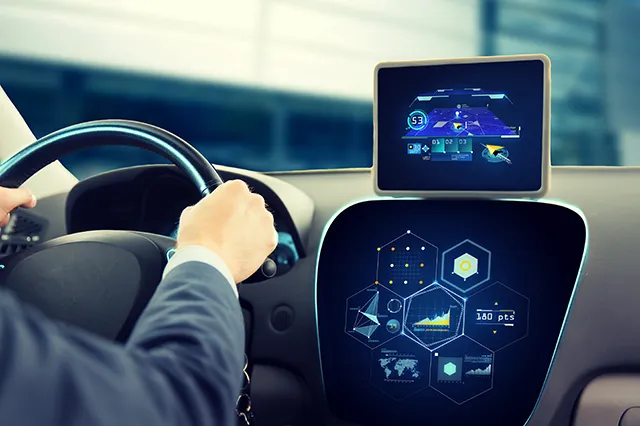
The vast majority of usage-based insurance programs utilize either a smartphone app or plug-in device that monitors driver behavior. Data collected varies by insurer but often includes mileage driven, speeding, hard braking and acceleration, as well as time of day and phone usage while driving.
The collected information is used to generate a risk score. Driving habits that are safer earn discounts, credits, or lower renewal rates. Conversely, riskier driving earns smaller discounts or increased rates.
One in four drivers in the US is now part of a UBI program, and nearly every major insurer offers one. Although programs differ from insurer to insurer, their goal remains the same: to match price with risk.
Testing Different Program Designs
The researchers from Penn Medicine wanted to know if the way the information is given is as important as the information itself. They conducted a nationwide randomized trial to test three different designs for the program.
The rewards for the drivers were up to $100, depending on their overall driving safety during the 12-week period.
The first group received standard feedback. They received weekly emails with their score and tips for improvement in the following areas: speeding, phone use, hard braking, and rapid acceleration.
The second group received a focus area. They were given one area to concentrate on, which was chosen by an algorithm, and received goals and tips for improvement in that one area.
The third group received a choose-your-own focus area. They were given the option to choose which area to focus on, and set their own goals for improvement.
The control group received no feedback, no tips, and no reward.
Make Sure You’re Not Overpaying
Advertiser Disclosure
RoadBuddy is a free resource that helps drivers compare auto insurance options.
We may receive compensation from some insurance companies and partners when you click on links or request a quote through our site. This may affect where offers appear, but it does not influence our reviews, guidance, or editorial decisions.
Our content is researched and written independently to give you clear and unbiased information.
By using RoadBuddy, you acknowledge and accept this disclosure. Learn more.
What Worked and What Didn’t
All three programs showed the same level of improvement in the way drivers behave. They sped less, braked more smoothly, and accelerated less aggressively. What was surprising, though, was that concentrating drivers’ attention on one behavior at a time did not perform better, nor did it perform worse, than the standard feedback approach.
The fact that all three programs showed the same level of improvement means that the feedback and incentives, in and of themselves, are more important than the way they are delivered.
There was one notable exception, and that was the issue of phone usage when driving. This was one area where the drivers did not show a great level of improvement, and the researchers believe it was not because the drivers were not interested in improving, but because the way the app was scoring the drivers was flawed. The app was giving the drivers high enough scores that they were essentially telling the drivers they were doing a good job, even when the phones were being used.
This, the researchers believe, led the drivers not to worry about the phones and focus more on the other areas where they thought they were being scored correctly.
Why Improvements Lasted After Incentives Ended
One of the most significant findings was that of persistence. The drivers continued to drive in a safer manner even after incentives were no longer provided.
From a behavioral science perspective, this is significant because many insurance programs are concerned that incentives will only be effective as long as money is on the table.
The researchers believe that improving reward structures could increase effectiveness even more. For example, smaller, more regular incentives may be more motivating than one incentive at the end of the program. Gamification features, grading criteria, and calibration of feedback could also increase effectiveness.
What This Means for Drivers
For drivers, the use of usage-based insurance is no longer simply a means to an end of finding discounts. It is increasingly becoming a means that can shape the way people drive on a daily basis.
Drivers who drive less, are cautious on the road, and are willing to change their behavior have the most to gain. However, drivers who are aggressive on the road or have erratic driving behavior need to be cautious about these programs, as not all usage-based insurance programs are purely discount-driven.
It is important to understand how a program scores behavior. Transparency is important. A program that is not transparent about risk can cause drivers to focus on the wrong behaviors or give them a false sense of security.
What This Means for the Future of Car Insurance
The study is just another step in what is becoming a larger trend in auto insurance. It is becoming more individualized, more data-driven, and more behavior-based. As these products become more refined, the line between safety program and pricing tool continues to blur.
If these products can be more widely adopted and made more effective, usage-based insurance could be an important step in reducing accidents, minimizing claims costs, and keeping premiums stable. For once, insurer self-interest and societal safety concerns could be aligned. The message to drivers is clear: your behavior is becoming more important than who you are.