
Colorado drivers have been getting hammered by auto insurance pricing, and Gov. Jared Polis is now trying to attack the problem like a cost-of-living issue, not just an insurance complaint. His administration’s message is basically: Colorado should not be paying top-tier premiums, and the state is going to target the biggest loss drivers that make insurers jack rates in the first place.
The plan is heavy on executive actions and agency coordination. That matters because it means Polis is aiming for changes he can push quickly (enforcement, warnings, verification, oversight) rather than waiting on a slow legislative grind. The part that still matters most for drivers is the same question it always is: will this show up in premiums, and how fast?
You can make a fair case that some of these measures hit real drivers of claim costs. You can also make an equally fair case that insurance pricing is slow, segmented, and stubborn. Both can be true.
Why Colorado’s auto insurance is so expensive right now
Polis is pointing to hail and theft as the biggest cost drivers. Colorado has a unique mix of risks that tends to produce a high volume of expensive claims.
First, hail is not a rare event in Colorado. It’s recurring, seasonal, and it hits the exact kind of loss category that insurers price aggressively: comprehensive claims. Those claims are frequent, they’re not tied to “bad driving,” and they can spike across entire metro areas in a single storm cycle. That kind of predictable volatility is poison for stable pricing.
Second, theft is not just the cost of stolen cars. Theft creates ripple losses. A stolen vehicle might be recovered but damaged. It might be recovered weeks later after storage fees pile up. It might be stripped. It might trigger disputed valuations. It might trigger fraud attempts that make insurers tighten claim scrutiny for everyone in the region. Either way, theft increases claim frequency and claim severity, and both feed directly into the rate math.
Third, crash severity has gotten worse. Even when total crashes don’t explode, more severe crashes drive up bodily injury payouts, litigation costs, rental durations, and repair totals. Severity is the claim category that can wreck an insurer’s book faster than “lots of small claims”, but drivers with DUI can reduce their car insurance costs.
Fourth, uninsured driving quietly amplifies costs. When more drivers are uninsured, more crashes turn into uninsured motorist claims, unpaid losses, lawsuits, and delayed settlements. Those costs get redistributed to insured drivers, one way or another.
Finally, repair inflation is relentless. Modern vehicles have sensors, calibration requirements, expensive lights, expensive bumpers, and parts that are not always readily available. A low-speed accident that used to be a straightforward repair can now turn into a higher bill with more steps and more delay. And longer repair cycles usually mean longer rentals, which adds another cost layer.
The governor’s plan is designed around the basic insurance equation: insurers price expected losses plus operating costs plus a margin. You can’t legislate your way to lower claims overnight, but you can reduce the conditions that cause claims to happen or become expensive. Here’s what the plan is focused on, and why each piece exists.

Speeding in Ohio? Expect Rates Jump
Increase enforcement in places where crashes are most costly
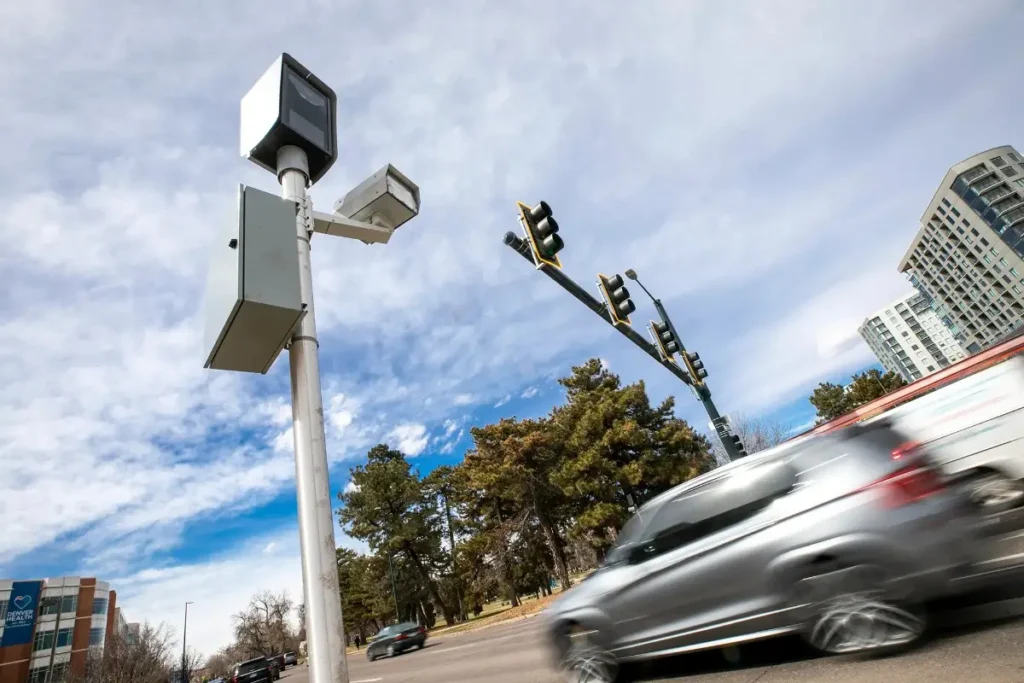
Polis is leaning into expanding safety camera enforcement, especially in work zones and other high-risk locations. The public-safety pitch is obvious: fewer injuries and deaths.
But there’s also an insurance rationale that’s more blunt: speed is a severity multiplier. The faster the crash, the higher the probability of injuries, total losses, and litigation. Those are the claims that actually move pricing. So enforcement isn’t just about writing tickets, it’s about reducing the type of crashes that are most expensive to insure.
Work zones are a special target because they tend to generate severe outcomes: abrupt lane changes, stopped traffic, distracted driving, and higher injury rates. If you can meaningfully reduce work zone crash severity, you reduce an expensive slice of claims.
The skeptical question is whether enforcement impacts the statewide loss experience enough for insurers to change pricing, but the underlying logic is not crazy.
Build a hail warning and mitigation pipeline that drivers can actually use
Colorado’s hail problem is a claim machine. Polis is trying to reduce hail damage by giving consumers better warning and practical mitigation guidance.
There are three real-world problems the state is trying to address here:
- Timing: many hail losses happen because drivers get no actionable warning window, or the warning comes too late to move the vehicle.
- Access: even when drivers know a storm is coming, they may not know where they can realistically park (covered garages, structured parking, safe public options).
- Behavior: consumers don’t think of hail prevention until after a claim. The state is trying to normalize basic precautions when warnings trigger.
If the state can reduce hail claim frequency even modestly, it could have a measurable impact on comprehensive losses. The governor has floated an ambitious target reduction over the next year or two. That target is optimistic. But it signals what the plan is trying to do: make hail damage less automatic.
Make Sure You’re Not Overpaying
Advertiser Disclosure
RoadBuddy is a free resource that helps drivers compare auto insurance options.
We may receive compensation from some insurance companies and partners when you click on links or request a quote through our site. This may affect where offers appear, but it does not influence our reviews, guidance, or editorial decisions.
Our content is researched and written independently to give you clear and unbiased information.
By using RoadBuddy, you acknowledge and accept this disclosure. Learn more.

Push harder on theft, not just the “stolen car” headline
The theft piece is one of the most rational levers in the whole plan, because theft losses are direct, measurable, and expensive. If theft declines and stays down, insurers have a clean actuarial reason to soften pricing.
The state’s approach is about enforcement and coordination, but what matters for insurance is the outcome: fewer theft claims, fewer total losses, fewer recovered-vehicle repairs, fewer long-duration rentals, fewer fraud patterns that force carriers to increase scrutiny.
This is also where “vehicle type” matters. If theft concentrates around specific models, insurers rate those models harshly regardless of what the statewide average is doing. A statewide theft reduction still might not help owners of high-theft models unless their segment improves too.
Reduce uninsured driving with faster and more consistent verification
Colorado already requires auto insurance, and penalties exist for driving uninsured. The problem is enforcement consistency. Polis wants to make it easier for law enforcement to verify coverage quickly through the state’s insurance database, so uninsured drivers can be identified faster and removed from the road sooner.
This is not about punishing people for fun. It’s about cost shifting. Uninsured driving raises the cost of insured driving. It increases uninsured motorist claims and makes many crashes harder to settle. If the uninsured rate drops, insurers can argue that losses drop, and pricing pressure should ease.
The reality check is that uninsured driving is often tied to affordability. If premiums stay high, more drivers drop coverage. That creates a feedback loop: more uninsured drivers, more uninsured motorist costs, higher rates, more uninsured drivers. Polis is trying to interrupt that loop by increasing compliance.
Put pressure on repair practices that inflate claims
Polis has also indicated he wants the Division of Insurance to flag repair shops that appear to be “taking advantage” through inflated billing patterns. This is sensitive territory because the repair industry will argue, with some legitimacy, that repairs cost more because cars cost more to repair.
Still, there is a real insurer complaint here: claim severity is sometimes inflated by disputes, supplements, questionable line items, and inconsistent documentation. The state seems to be exploring whether it can identify outlier behavior that is driving claim cost increases beyond what’s explained by normal repair inflation.
This part could easily become political theater if it turns into “blame the repair shops” without evidence. But in theory, reducing claim severity inflation is a valid cost-control move.
The key limitation: Colorado can’t command insurers to cut your premium
Even if Polis’ plan reduces losses, it doesn’t automatically translate to immediate rate drops. Insurance pricing is slow and segmented. Slow, because insurers often wait for sustained improvements before changing rate filings. They want stable evidence, not one good season. Segmented, because your premium is based on your specific risk bucket. Two neighbors can pay wildly different rates based on garaging location, vehicle model, prior claims, mileage estimates, credit-based insurance score (where permitted), and insurer-specific underwriting rules.
So the most realistic path of improvement looks like this:
- Step one: rate increases slow down first.
- Step two: some carriers file modest decreases for specific segments.
- Step three: meaningful drops show up through shopping and switching rather than automatic renewal reductions.
That means drivers may hear “rates are going down” while still personally paying more, depending on their segment.
Will hail alerts and speed cameras actually move the needle
Here’s the practical evaluation, without the marketing. The theft and uninsured driver pieces have the cleanest actuarial link to premiums. If theft drops and uninsured driving drops, claim costs should follow. The speed enforcement piece can reduce severity, but it needs to be sustained and targeted enough to change statewide outcomes. The more narrowly it’s applied, the more localized the benefit. The hail mitigation piece is plausible but limited by reality: many drivers can’t move their cars quickly, and many areas lack accessible covered parking. But because hail claims are high volume, even a modest reduction in frequency can matter if it’s consistent. The repair oversight piece is the hardest to predict. It can either identify real outliers or become a blame game. Its effectiveness depends on whether the state can actually influence claim severity without breaking repair quality or creating longer cycle times.
What Colorado drivers should do now, before policy changes show up in renewals
If you want this to be useful to readers, the advice has to be what actually works in a high-volatility market.
Shop renewals like it’s mandatory
Colorado is the kind of state where carrier pricing differences can dwarf any discount program. Different carriers weight hail, theft, and territory differently. Even if the market improves, you may only capture the improvement by switching.
Build your policy around the risks Colorado actually has
If hail is your biggest realistic loss, pay attention to comprehensive deductible, not just collision. Many people set a low comp deductible and then wonder why their premium is brutal. If you can absorb a higher deductible, you can sometimes buy down premium meaningfully. If you can’t absorb it, keep it realistic. If theft is high in your area or for your model, comprehensive is the coverage that matters. Cutting comp to save money can turn theft into a financial crisis.
Don’t “save money” by creating lawsuit exposure
High premiums push drivers toward minimum liability. In an expensive state, minimum limits can get blown through fast in injury crashes or multi-vehicle accidents. If you have assets or stable income, the liability decision is not about your car’s value. It’s about how exposed you are if you cause a bad crash.
Cut the soft stuff that doesn’t help when a claim hits
A lot of drivers are paying for add-ons that don’t deliver value: weak roadside plans, tiny rental reimbursement limits, duplicate coverage through memberships or credit cards. Trimming those can reduce premium without blowing up your core protection.
Use anti-theft basics consistently if you own a theft-prone model
It’s boring, but it’s effective: steering wheel locks, secure parking when possible, key fob protection if relay theft is a risk for your model, and avoiding leaving keys and valuables in the car. Theft frequency is one of the inputs insurers punish hardest over time.