

For years, the question has hung in the background of automotive innovation: If a car’s software is involved in how it handles, stops, or avoids accidents, who ultimately is responsible when things go wrong?
The question is becoming more urgent as advanced driver assistance systems, or ADAS, move from being optional features to being standard equipment on many vehicles. Historically, insurance companies have determined risk factors by looking at driver history, car type, and location. Right now, more and more policyholders are concerned about the security of their external car insurance company. In this context, the involvement of carmakers with insurance is a reality.
From Marketing Tie-Ins to Full Control
The initial efforts by car makers to shape insurance rates were relatively narrow in focus. Some car models advertised lower insurance rates based on safety reputations, while others offered insurance packages with vehicle subscriptions. Data-sharing agreements between car makers and insurance companies also began to appear, enabling insurance companies to use vehicle data in insurance rate calculations.
These developments were a precursor to a paradigm shift but did not result in a fundamental transformation. Underwriting, the assumption and pricing of risk, was firmly in the domain of traditional insurance companies. This is gradually being turned on its head.
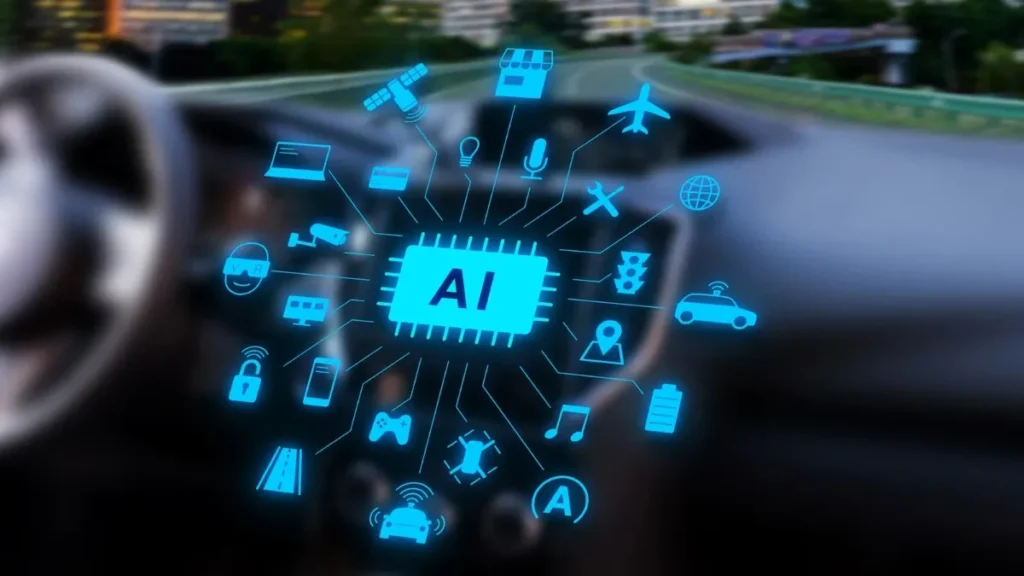
How Car Insurance Companies Are Using AI
Moving Insurance In-House
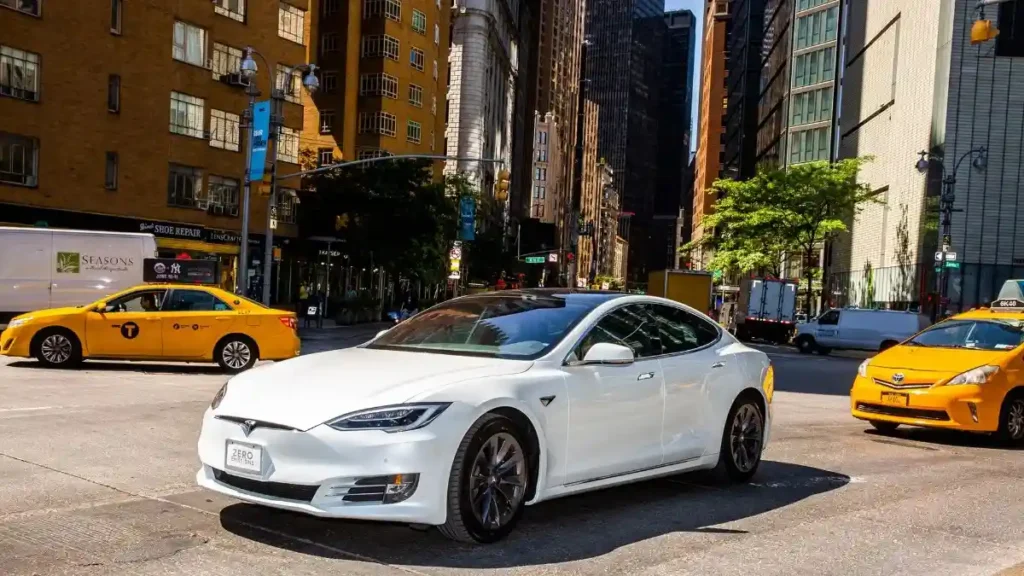
A notable development in this space is the move by an electric vehicle manufacturer to underwrite its own insurance policies in California, rather than relying on an external insurance partner. This marks a transition from offering branded insurance products to directly managing pricing, claims, and risk.
For policyholders who opt into the transition, a small one-time premium adjustment has been offered as an incentive. More importantly, the change gives the automaker direct responsibility for insurance performance in one of the largest and most tightly regulated auto markets in the country.
California’s regulatory framework limits how driving behavior data can be used in pricing, but underwriting control still provides meaningful leverage over claims handling, repair decisions, and loss management.
Why Control Matters More Than Branding
Underwriting is where insurance profitability is made or lost. By managing underwriting directly, an automaker gains the ability to:
- Align repair standards with its own service networks
- Decide when a vehicle is repaired versus declared a total loss
- Reduce friction between insurers and repair facilities
- Collect first-party data on loss patterns tied to specific hardware and software configurations
This matters because electric vehicles often carry higher repair costs, longer repair times, and more frequent total losses due to battery damage or sensor calibration requirements. These dynamics have been widely documented across the industry, including by the National Association of Insurance Commissioners. For traditional insurers, those costs can be difficult to predict or control. For manufacturers, they are tied directly to design and production choices.
Make Sure You’re Not Overpaying
Advertiser Disclosure
RoadBuddy is a free resource that helps drivers compare auto insurance options.
We may receive compensation from some insurance companies and partners when you click on links or request a quote through our site. This may affect where offers appear, but it does not influence our reviews, guidance, or editorial decisions.
Our content is researched and written independently to give you clear and unbiased information.
By using RoadBuddy, you acknowledge and accept this disclosure. Learn more.

Data, Liability, and the Long Game
Although some states restrict how vehicle data can be used for pricing today, that does not eliminate its long-term relevance. As vehicles become more software-defined, insurers will need to understand not just how a driver behaves, but how a system behaves under real-world conditions. Control over insurance creates a feedback loop: claims data informs engineering, and engineering informs risk modeling. That loop is difficult to replicate when underwriting is outsourced. This becomes even more relevant as autonomous and semi-autonomous systems expand. Liability in these cases is not always clear-cut, and insurance structures may need to adapt accordingly.
Market Friction and Repair Reality
Recent coverage challenges for Tesla or certain electric vehicle models highlight why automaker-led insurance is gaining attention. High repair costs, limited parts availability, and long wait times have made some vehicles less attractive to insure under conventional models. Industry-wide data shows that claim severity, not frequency, is driving loss pressure in auto insurance, particularly for newer vehicles with advanced technology. AM Best has repeatedly noted this trend in its market outlooks. By underwriting directly, manufacturers may be better positioned to absorb or manage these costs internally, rather than passing uncertainty to third-party insurers.
Risks and Open Questions
This model is not without challenges. Insurance is heavily regulated, capital-intensive, and exposed to volatility. Managing consumer complaints, regulatory compliance, and loss ratios requires capabilities far removed from vehicle manufacturing. There have also been legal and regulatory questions raised around data accuracy, pricing transparency, and consumer protections in automaker-linked insurance programs. These issues remain unresolved and will likely shape how far this model can expand.
Why This Matters Beyond One Company
What’s going on here is less about a particular car company and more about a structural experiment. If car companies can successfully integrate insurance into their business models, it could change the way risk is priced in the car industry, especially with electric and autonomous cars. The traditional insurance industry is watching with interest. So are the regulators. If car company-controlled underwriting is successful, it could change the way the lines between car manufacturing, software, and financial risk are defined. Whether this will result in lower costs for car owners or just change who bears the risk is unclear. What is clear is that insurance is no longer just an accessory to car ownership. It’s becoming part of the product.