

Commercial auto insurance is no longer a niche product that simply follows the trucking cycle. It’s becoming a key battleground for insurers because fleets are growing, delivery traffic is constant, claim costs are continuing to rise, and regulatory scrutiny is requiring better compliance. At the same time, the technologies that underpin pricing and managing commercial auto risks are shifting rapidly. Telematics, automated underwriting, digital claims, and usage-based pricing are shifting from “pilot” to “standard” in many segments of the commercial auto market.
Projections for the commercial auto insurance market indicate that growth is expected in the coming decade, and the global market size is projected to rise from around $200 billion in the mid-2020s to well over $400 billion in the mid-2030s. The actual numbers vary from model to model, but the consensus is clear: more insured commercial auto miles, more complex claims, and a growing need for policies that resemble a fleet service rather than a traditional certificate of insurance.
What commercial auto insurance covers
Commercial auto insurance policies cover autos for business purposes, and this could be anything from one plumber’s van to a logistics company’s entire fleet of autos. The essential part of the commercial auto policy, like all auto policies, is liability, which protects the owner in the event of bodily injury and property damage to another in the event of an auto accident. Physical damage, or collision and comprehensive equivalents, is also part of the commercial auto policy for autos owned or financed.
The increase in this particular product mirrors the world of business. More autos on the road for last-mile deliveries, more rideshare autos on the road in heavy traffic, and more autos crossing international borders and shipping products in a timely manner, all of this translates to more auto accidents. The product has to keep up.
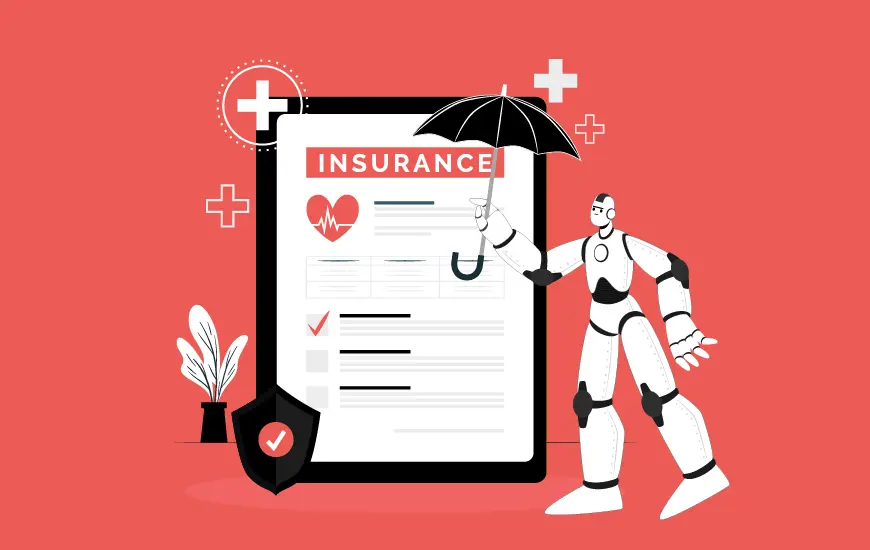
More Americans are using AI to shop for car insurance
Why premiums and claim costs keep rising in commercial auto
Commercial auto losses are being squeezed from all sides, and none of these trends are easy to reverse. Repair costs have gone up. Trucks and vans have gotten much more sophisticated with increasing numbers of sensors and electronics. Even “routine” repairs take longer to complete, and with parts availability sometimes being in short supply, cycles can be long.
Another key driver has been litigation/settlement issues. Liability claims involving commercial vehicles have a tendency to become high-dollar claims, especially if injuries are involved.
The frequency and congestion of accidents also play into this. Commercial vehicles have more time spent on the road than personal vehicles, and increasingly that time is spent in congested areas with more conflict points.
This all has big implications for how underwriting works. No longer can you rely on broad averages when outcomes are so volatile. You need more detailed risk signals and better control over fleet behavior.
The biggest trend: telematics is becoming underwriting infrastructure
Telematics used to be viewed as a fleet management solution, but now it’s viewed as a pricing and claims solution.
Insurers who can access real-time or near-real-time data can use that data to better price risks. They can analyze speeding, hard braking, rapid acceleration, route types, time of day, and idle time, as well as crashes and near-crashes. This can be used for fleets, which can benefit from driver coaching, scorecards, and maintenance planning, while insurers can benefit from segmentation and reduced uncertainty.
And that’s why we’re seeing more of the usage-based insurance come into commercial auto. For fleets who tend to operate predictably and who invest heavily in their safety, there can be real savings for them. For fleets who tend to operate unpredictably, there can be real premiums for them.
Make Sure You’re Not Overpaying
Advertiser Disclosure
RoadBuddy is a free resource that helps drivers compare auto insurance options.
We may receive compensation from some insurance companies and partners when you click on links or request a quote through our site. This may affect where offers appear, but it does not influence our reviews, guidance, or editorial decisions.
Our content is researched and written independently to give you clear and unbiased information.
By using RoadBuddy, you acknowledge and accept this disclosure. Learn more.

Digital claims and AI: faster intake, more structured decisions
Commercial claims can be costly in part due to how operationally complex they are. For one, evidence may be slow to come in. Documentation may be spotty. Repairs may take time to arrange. The threat of litigation may be looming over many claims files. Digital claims management aims to alleviate all that.
We see many carriers and service networks now promoting digital first notice of loss, photo capture, and auto triage. AI-based solutions may be used to aid in damage analysis, estimate creation, fraud identification, and expediting claims to the correct adjuster or repair resource quickly. The idea here is not to bypass human oversight but to minimize time spent on repetitive tasks and time to decision.
For fleet managers in particular, time spent waiting out claims can be a cost in itself. The longer a fleet sits idle, the longer it doesn’t generate income for the business. Claims time becomes a business performance metric rather than simply an insurance one.
Fleet electrification changes the risk profile
As commercial fleets begin to integrate electric vehicles into their mix, insurers have to consider different patterns in terms of damage severity. In some cases, electric vehicles may have higher damage costs in specific instances, especially if batteries or other components are involved.
There are also different risks involved in terms of operation.
Insurers are addressing this in part by revising how they price electric vehicle fleets, creating specialized repair processes, and revising policy language in terms of equipment costs and replacement.
This process tends to vary heavily depending on the type of vehicle, the repair process in the region, and how standardized parts availability is for that type of vehicle.
Embedded insurance and ecosystem partnerships are reshaping distribution
Commercial auto insurance is increasingly being delivered within existing workflows rather than a traditional “go find an agent and bind a policy” model. More fleets are now experiencing insurance being delivered in the workflow related to purchasing a vehicle, leasing a vehicle, or onboarding a fleet management solution.
This is potentially a positive change for small fleet operators that need to find insurance in a timely manner. It is also a positive change for insurers, as they gain better data and a closer relationship with the operations of the fleet.
In the future, embedded distribution is likely to be a significant way that small commercial operators purchase insurance, particularly in the delivery and light commercial space.
Where the market is heading by segment
Liability remains the backbone of commercial auto because it is required in most jurisdictions and because bodily injury claims are the biggest severity threat. That makes liability the largest share of premium in many commercial programs. It also means underwriting discipline and claims handling quality matter more than marketing.
Trucking and logistics remain the most visible segment because of the scale of miles driven and the severity potential when heavy vehicles are involved. Fleets in this space are also more likely to adopt telematics, driver monitoring, and structured safety programs because insurers increasingly demand it as a condition for competitive pricing.
Rideshare, last-mile delivery, and mixed-use fleets are evolving quickly as well, especially where vehicles shift between personal and commercial use. This category creates challenges around coverage timing, driver classification, and claims coordination, which is why on-demand and embedded insurance models keep expanding.
What fleet owners should take from this
Commercial auto insurance is becoming less about a static premium and more about an ongoing risk partnership. Fleets that can prove safety performance, maintain consistent driver behavior, and reduce downtime through better maintenance and incident response are positioned to negotiate better pricing and better terms.
The practical moves that matter are not mysterious. Clean driver onboarding, ongoing safety training, telematics adoption with real coaching, maintenance discipline, and fast post-incident documentation all reduce loss volatility. Insurers price volatility aggressively, especially in liability-heavy fleets, so anything that reduces surprise outcomes tends to improve renewals over time.